Introduction
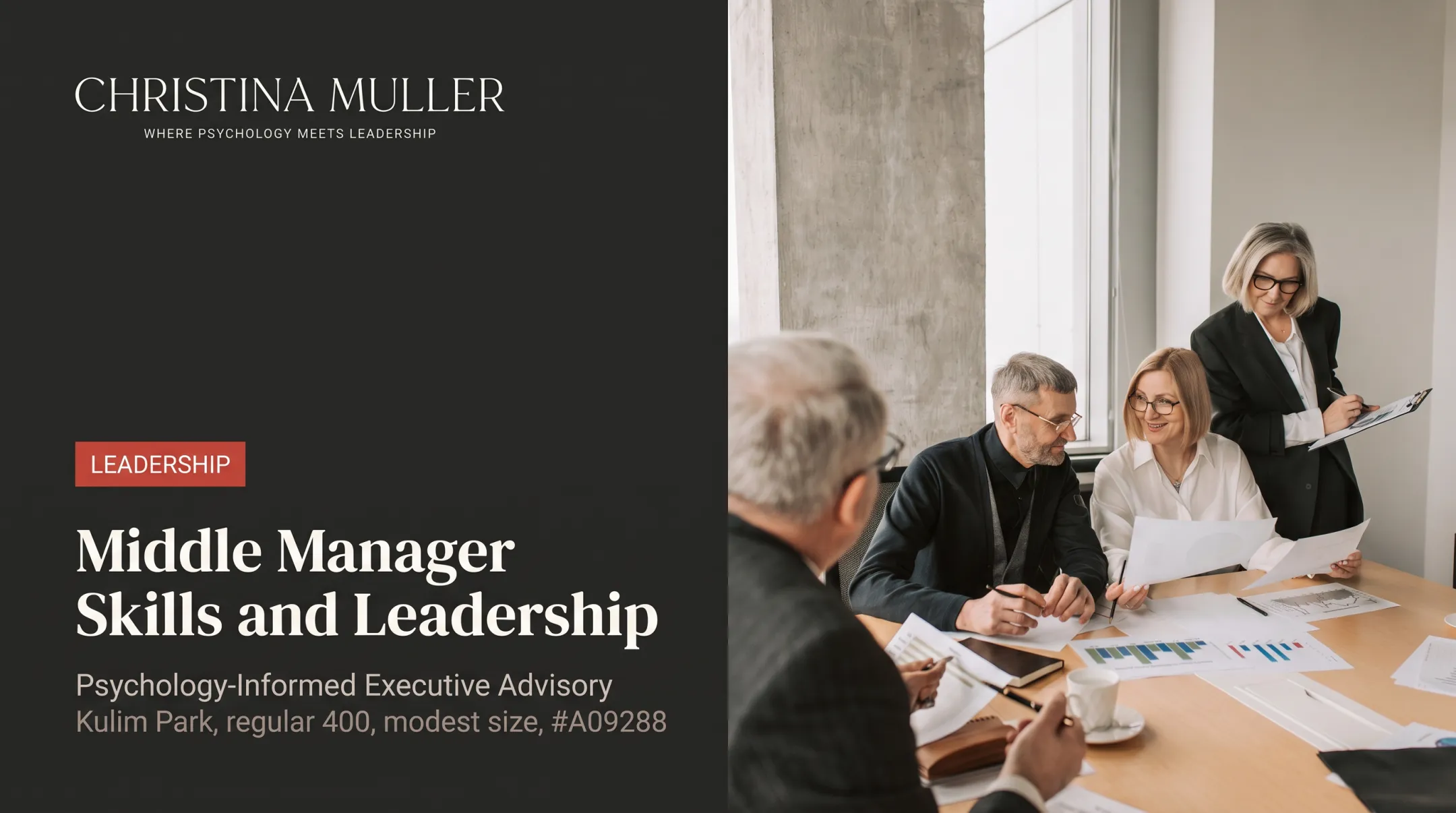
Senior leaders set strategy. Frontline employees live with the consequences. Middle managers convert one into the other, usually while doing their own operational work too.
Organizations invest heavily in technology, restructuring, and new priorities. They often underinvest in the people who carry those changes into daily work.
McKinsey's survey found that nearly half of middle managers' time goes to nonmanagerial tasks, and only 20% strongly agree their organization helps them succeed as people managers.
Managing middle managers means giving them clear expectations, appropriate authority, realistic capacity, development, and a trusted channel for raising concerns. Piling on more pressure is not management.
This article covers who they are, why they matter, what goes wrong without support, and how to fix it.
Key Takeaways
- Middle managers link strategy, daily execution, and employee experience.
- Their results depend on decision rights, workload, communication, and leadership support.
- Supported managers surface problems earlier and lead change more sustainably.
- During AI adoption, they need role-specific guidance and protected capacity, not just tool training.
What Are Middle Managers?
Middle managers sit between senior leadership and frontline supervisors or employees. Titles vary: department manager, operations manager, regional manager, senior manager, director, or manager of managers.
The three management levels
- Senior leaders set direction, allocate resources, and establish enterprise priorities.
- Middle managers translate priorities into plans, coordinate across functions, and manage other managers or teams.
- Frontline managers and supervisors oversee immediate workflow and day-to-day employee support.
The American Management Association defines middle management as the link between senior and lower management, responsible for translating strategy into action.
Managing is not micromanaging
Managing middle managers does not mean hovering. Senior leaders set outcomes, boundaries, decision rights, escalation paths, and support systems. Middle managers then use judgment within their areas.
Why Managing Middle Managers Matters
They turn strategy into execution
Broad goals become priorities, workflows, staffing decisions, and team expectations through middle managers. Say the executive team announces "improve customer responsiveness." Without translation, operations shortens call times, sales promises same-day replies, and finance freezes the hiring both need. Three departments, three interpretations, competing work.
They carry communication in both directions
Middle managers explain the reasoning behind decisions. They also send up information about workload, customer needs, barriers, morale, and emerging risks.
Gallup found that employees whose managers actively support change are 11 times as likely to believe leaders give a clear vision of how changes affect the organization. That is an association, not proof of causation, but it points to where alignment gets built.
They shape culture and development
Values become visible in everyday choices about feedback, recognition, accountability, flexibility, conflict, and inclusion. Gallup attributes 70% of team-level engagement variance to managers generally.
Development is part of the job too. In McKinsey's survey, 86% of middle managers named coaching among their highest-value activities. They spot capability gaps, coach emerging leaders, coordinate across teams, and hold institutional knowledge that executives rarely see.
They decide whether change sticks
Managers help employees interpret what is changing and what stays stable. They also give people room to practice new behaviors and raise concerns before confusion becomes an operational problem.
The risk is real. A Prosci-cited benchmark found 42% of participants identify mid-level managers as the group most resistant to change, and only 35% report adequate manager preparation and support. Resistance often follows from missing preparation.

What Happens When Organizations Fail to Support Middle Managers?
The middle-management squeeze
Managers are asked to satisfy executive demands, protect team well-being, maintain performance, and finish their own work, all at once. Gartner reports that 75% of 805 HR leaders say managers are overwhelmed by expanding responsibilities, and 69% say leaders and managers are not equipped to lead change.
Spans are growing as well. Gallup data show the average US manager had 12.1 direct reports in 2025, up from 10.9 in 2024.

Accountability without authority
When managers are held responsible for results but lack budget, staffing, information, or decision rights, they escalate everything. Decisions slow down. Good managers get frustrated or leave.
Filters instead of translators
Managers who feel unsafe or uninformed soften bad news, skip risks, and pass along half-formed instructions. Harvard's professional education team notes that delayed bad news is a common middle-management problem. Leaders then make decisions on incomplete information.
Effects on employees and culture
- Expectations differ from team to team
- Feedback is weak and conflict goes unresolved
- Visible manager exhaustion erodes trust
- Employee experience depends on which manager you drew
Cutting layers without cutting the work
Removing titles does not remove coordination, prioritization, coaching, and cross-functional alignment. Those tasks still need an owner.
CNBC's report on Bayer's move away from traditional managers describes mixed early results, with tension from frequent team reshuffles alongside a successful campaign. One company is not a verdict, but it shows the point: eliminate bureaucracy, not essential management capacity.
How Should Organizations Manage and Support Middle Managers?
Clarify the role, mandate, and decision rights
Define what each manager owns, which decisions they make alone, which need consultation, and when to escalate. A framework such as Bain's RAPID (Recommend, Agree, Perform, Input, Decide) makes ownership visible.
Success measures should combine business outcomes with people-management responsibilities. Judging managers only on short-term output teaches them to neglect coaching.
Create reliable communication and escalation channels
- Hold structured one-on-ones with senior leaders covering priorities, barriers, team signals, decisions needed, and workload, not only status
- Use skip-level listening sessions to add context without undercutting the manager
- Run cross-functional forums and manager communities so peers solve shared problems together
Manage workload and protect capacity
Tell managers what must continue, what can wait, and what stops. "Prioritize better" fails when the total load is unrealistic.
Protect time for coaching, change communication, learning, and team problem-solving. McKinsey warns that development can become just another time-consuming task, so embed practice and coaching in the work itself.
Invest in development, coaching, and peer support
Train in communication, delegation, conflict, feedback, change leadership, and working across functions, using realistic scenarios rather than generic theory. Add coaching, peer groups, mentoring, and manager-of-manager support.
McKinsey describes a North American bank's ten-month program, combining workshops, peer work, mentoring, and coaching, after which participating managers launched more than 20 initiatives. That is a reported outcome, not proven causation.
Build sustainable career paths and recognition
Offer parallel individual-contributor and people-leader tracks so management is not the only way up, as SHRM describes. Recognize invisible work too: coaching, coordination, knowledge transfer, and emotional labor.
Measure whether it is working
Track a balanced set of signals:
- Manager clarity about role and priorities
- Decision speed
- Workload sustainability
- Employee feedback
- Regrettable turnover and internal mobility
- Completed development conversations
Credible middle-manager-specific benchmarks for turnover and mobility are scarce, so set targets against your own baseline. Then act visibly on what managers tell you. Surveys with no follow-through damage trust.

Middle Managers During Organizational Change and AI Adoption
Involve them before the announcement
Managers need to understand:
- Why the change is happening
- How roles and workflows will shift
- What support exists
- Where their decision boundaries sit
- What language leaders want used
Prosci recommends manager-focused communication very early in the project lifecycle, before managers brief their teams.
AI adoption data underscores the manager's role. In a Gallup survey of 23,717 US workers, frequent AI use was 78% among employees who strongly agreed their manager actively supports AI, versus 44% among those who did not.
That is an association, not causation. Yet only 28% of employees in organizations implementing AI strongly agree their manager actively supports the team's use.
Managers feel the strain too. BCG found 37% report increased mental strain since adopting AI, and 55% say their company lacks clear guidance for managing human-AI teams.
Build a feedback loop
Managers can listen for:
- Confusion
- Fear
- Workload strain
- Skill gaps
- Unintended consequences
They then escalate patterns without promising outcomes they cannot control.
Practical support
Christina Muller's COUNTED at work™ Score is a free five-minute assessment that measures leader clarity, ownership, and perceived organizational support during AI adoption. It helps identify gaps before they show up in adoption, retention, or trust.
For hands-on help, her Carrying the Rollout™ workshops (half-day or full-day) address ownership, delegation, decision rights, and responsibilities through successive waves of AI change. A conference workshop built on the framework received a 4.7/5 average rating from attendees.
Frequently Asked Questions
What does it mean to be middle management?
Middle management is the layer between senior leadership and frontline employees or supervisors. It translates strategy, coordinates execution, and supports teams.
What is the 30-60-90 rule for managers?
The 30-60-90 rule organizes a new manager's early priorities into learning and relationship-building (30), initial execution (60), and longer-term ownership (90). Adapt the timeline to the organization and role.
Why are middle managers important to organizational success?
They turn strategy into execution, enable two-way communication, shape culture, develop talent, and guide teams through change.
How can organizations support middle managers?
Give them clear decision rights, realistic workloads, regular communication, development, coaching, peer support, and meaningful career paths.
What happens when middle managers are not supported?
Unclear authority and excess workload can create bottlenecks, inconsistent communication, burnout, lower trust, and weaker change adoption.
How should middle managers be prepared for organizational change or AI adoption?
Involve them early, give role-specific communication guidance, and protect learning time. Add feedback channels, clear escalation paths, and support for employees whose responsibilities are changing.